Renters Reform Bill
After years of discussion, debate, and delay, the Renters’ Rights Act 2025 has finally become law, and it brings some of the biggest changes the private rental sector has seen in a generation. Whether you’re renting, letting, or somewhere in between, here’s a straightforward breakdown of what’s changed and why it matters.
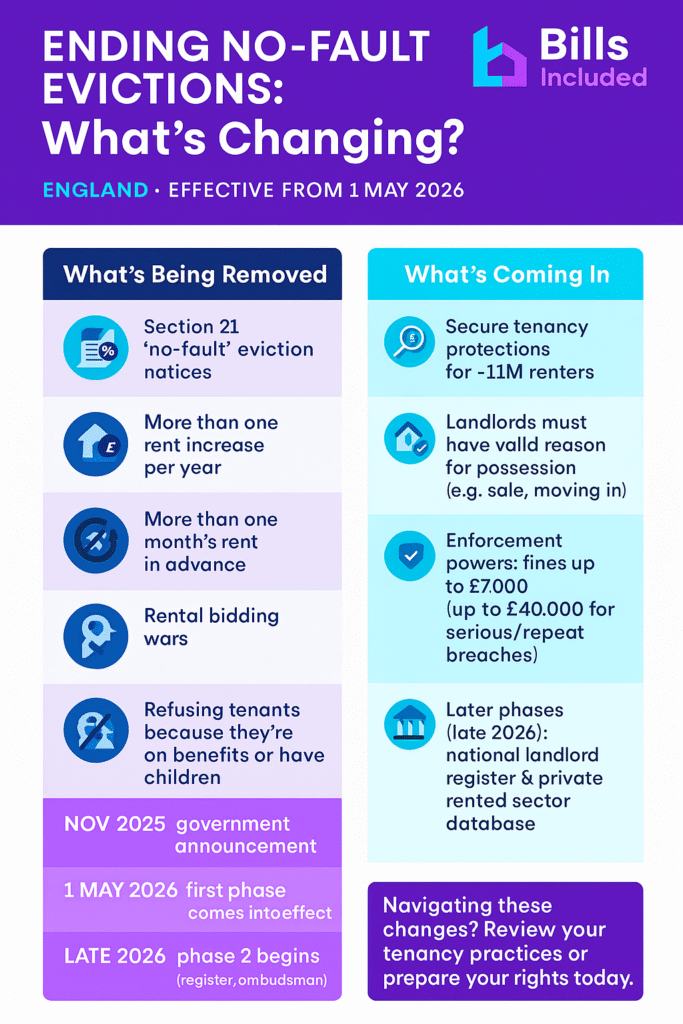
Goodbye ‘No-Fault’ Evictions
One of the biggest headlines is the end of Section 21 evictions. This means landlords can no longer ask tenants to leave without giving a reason.
Instead, tenancies can only end if a landlord provides a valid ground, for example, wanting to sell the property or needing to move in themselves. For renters, this means far more stability; for landlords, the process becomes clearer and more structured.
Rolling Tenancies as the New Default
The old fixed-term model is being phased out. Moving forward, most tenancies will be open-ended. Renters can leave with two months’ notice, giving them more flexibility to relocate for work, study, or life changes.
This helps reduce the pressure of long commitments while still giving landlords predictable notice periods.
Fairer Rules for Rent Increases
Rent can now only be increased once per year, and landlords must give two months’ notice before any rise takes effect. This change aims to bring predictability and prevent sudden spikes that leave renters scrambling.
A New Era for Pet-Friendly Renting
Good news for animal lovers: tenants can now request permission to have a pet, and landlords can’t refuse without good reason. While landlords can still require pet insurance to cover potential damage, the rules make it far easier to keep pets in rented homes.
Ending Bidding Wars
Landlords and agents can no longer encourage offers above the advertised rent. This rule is designed to keep things fair and transparent, and to stop competitive bidding that pushes prices artificially high.
Stronger Protection Against Discrimination
The Act reinforces that renters cannot be treated unfairly if they have children or receive benefits. It closes loopholes and puts more responsibility on landlords to treat all applicants consistently.
Minimum Standards for All Homes
A new legally enforceable “Decent Homes Standard” now applies to private rentals. Properties must be safe, free from serious hazards, and maintained in good condition. Local authorities have stronger powers to fine or challenge landlords who neglect repairs or health issues.
Introducing the Renter Ombudsman
A new independent Ombudsman service will help resolve disputes quickly, without needing to go through courts. It’s designed to reduce stress, cost, and long waiting times for both renters and landlords.
Landlord Registration Becomes Mandatory
Every landlord must now register on a national database. This helps improve accountability across the sector and makes enforcement easier when landlords fail to meet legal obligations.
What This Means Overall
For renters, the Act aims to create more stability, safety, and fairness. For landlords, it’s about clearer standards and improved oversight.
The hope is a rental market where expectations are transparent, disputes are resolved faster, and homes are consistently well-maintained.